to top

Thesis Topic
Yun Shouping (1633–1690), a painter of the early Qing, is written into the standard narrative of Chinese art history as the founder of the Changzhou School, and his boneless (mogu) flower painting has long been held up as a canonical model of Qing-dynasty flower painting. Drawing on the social history of art and the history of reception, this study examines how his painterly style took shape and how it was received, tracing in particular the process by which his standing as the “orthodox tradition of flower painting” (xiesheng zhengzong) came into being.
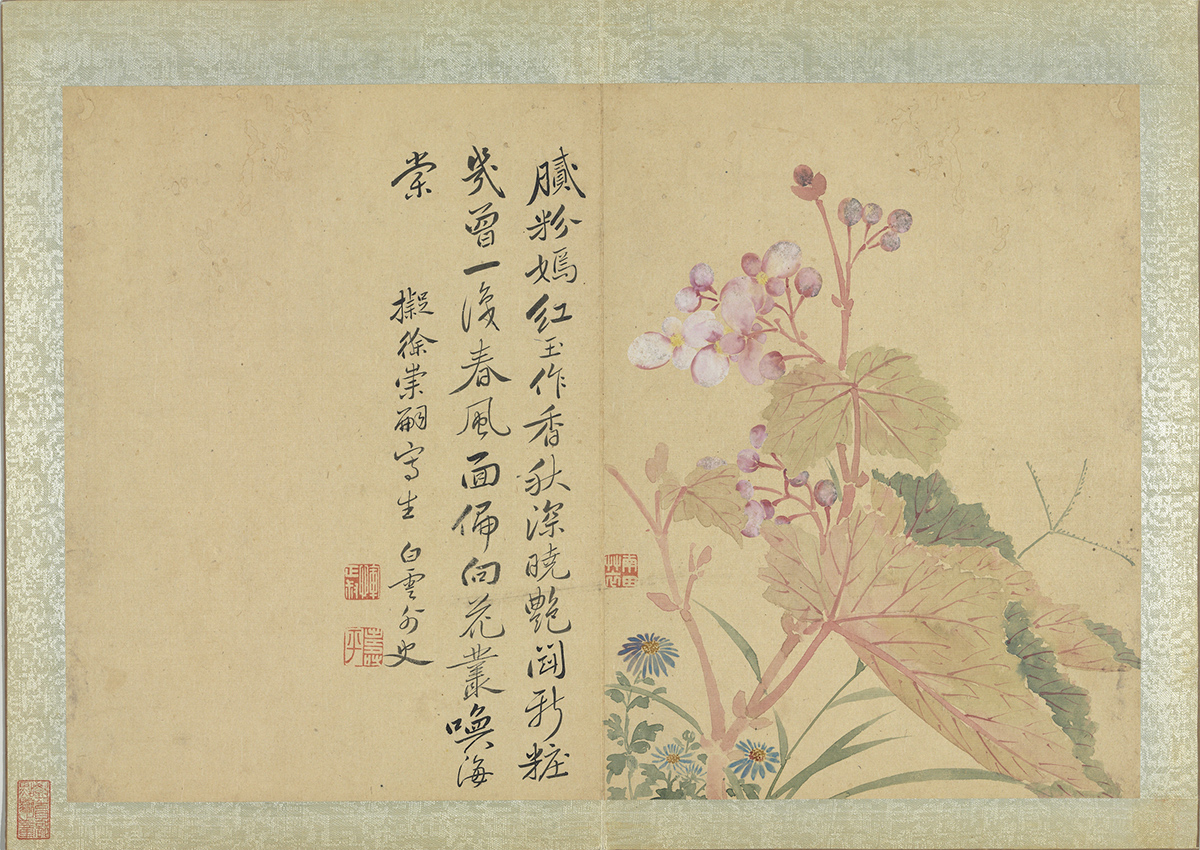
The first chapter reconstructs the family’s literary and artistic tradition alongside the development of flower-and-insect painting in the Piling region, showing that Yun’s boneless flowers owe much to the local lotus-pond and grass-and-insect tradition. In his own colophons, however, Yun traces this manner back to Xu Chongsi, thereby recasting a practice rooted in local convention and closely bound up with market demand as boneless painting in the idiom of literati art. The second chapter draws on dozens of Yun’s private letters to examine his social networks and his practice of selling paintings in early Qing Jiangnan, considering how a professionalized literati painter managed his limited cultural capital, and how he ceded part of his control over style to those commissioning his work. The third chapter turns to his ideas about painting and his handling of technique, discussing how his mode of flower painting departed from that of earlier periods, and further relating his emphasis on “consulting the workings of nature” and “the pursuit of close likeness” to the vogue for natural-historical knowledge in early Qing Jiangnan. The final chapter follows the transmission and reception of Yun’s boneless flowers from the mid-Qing through the late Qing, analyzing how court patronage, imitation by his followers, the printing of painting manuals, and circulation through decorative crafts together propelled his flower-painting style toward canonical status.