to top
Thesis Topic
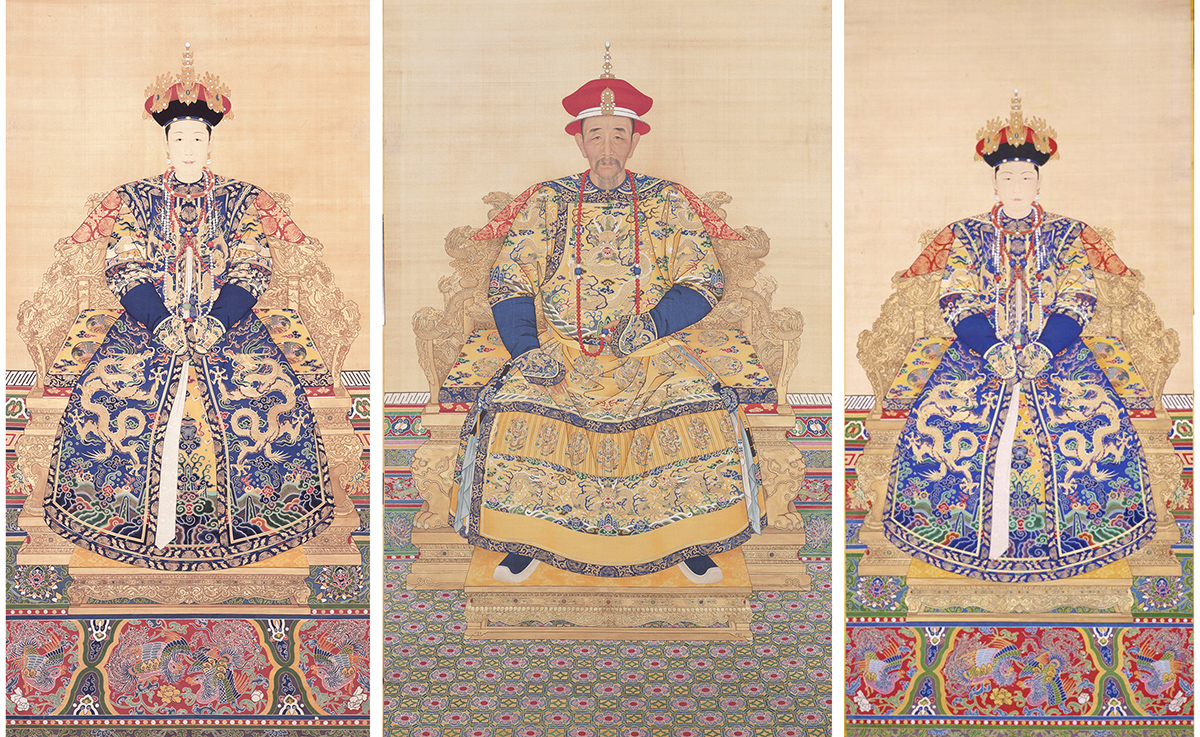
Ancestral portraits, also called ancestral images (zuzong xiang, zuru xiang, or zuying xiang), refer to realistic depictions created by descendants for worship and commemoration. During the Ming and Qing dynasties, they assumed diverse visual forms, reflecting different techniques, compositions, and meanings. This paper focuses on large-format, court-dress portraits (yiguan xiang), which were both works of traditional Chinese portraiture and functional ritual objects. They were closely tied to fixed ceremonial spaces—ancestral halls, clan shrines, and family temples—systematically embedded in sacrificial practices, and influential in the social lives of descendants.
The study investigates Qing sacrificial portraits now dispersed worldwide. Using the evolution of ancestral ritual systems as its warp and the portrait-making of emperors, nobles, officials, and commoners as its weft, it explores how the Qing, as a conquest regime, engaged with Han Chinese traditions. By comparing official and popular perspectives, it reveals the interaction between ritual order and social custom.
The paper argues that, prior to the Qing, official ritual regulations on the use of portraits in ancestral worship evolved significantly: rejected under the Han–Tang, incorporated into state ritual during the Liao–Song, and in the Ming–Qing not formally codified but tacitly permitted. In the Yongzheng and Qianlong reigns, the Qing court systematically adopted Han rituals, constructing ancestral temples, enshrining portraits, and formalizing dual ritual spaces for both state and domestic sacrifice. This transformation encouraged extensive portrait commissions among imperial clans and nobility, with many images of Shunzhi and Kangxi-era figures produced only later.
Meanwhile, among commoners, portraits continued late-Ming traditions, actively shaping social life, etiquette, and even regional order. By comparing Ming and Qing images, the study shows that their internal pictorial space, ritual environment, and intended audience all contributed to constructing individual and lineage identities. Through the display of hierarchy and honor, sacrificial portraits served as instruments of moral edification and reinforced clan cohesion.