to top

Thesis Topic
This dissertation examines how Sogdian identities in medieval China were produced through labels and representations operating in different political, social, and cultural contexts and across different media. It argues that although places of origin and certain cultural traits remained recognizable, Sogdian-related labels did not carry the same meanings across contexts, nor did they coalesce into a consistent, collectively recognized designation.
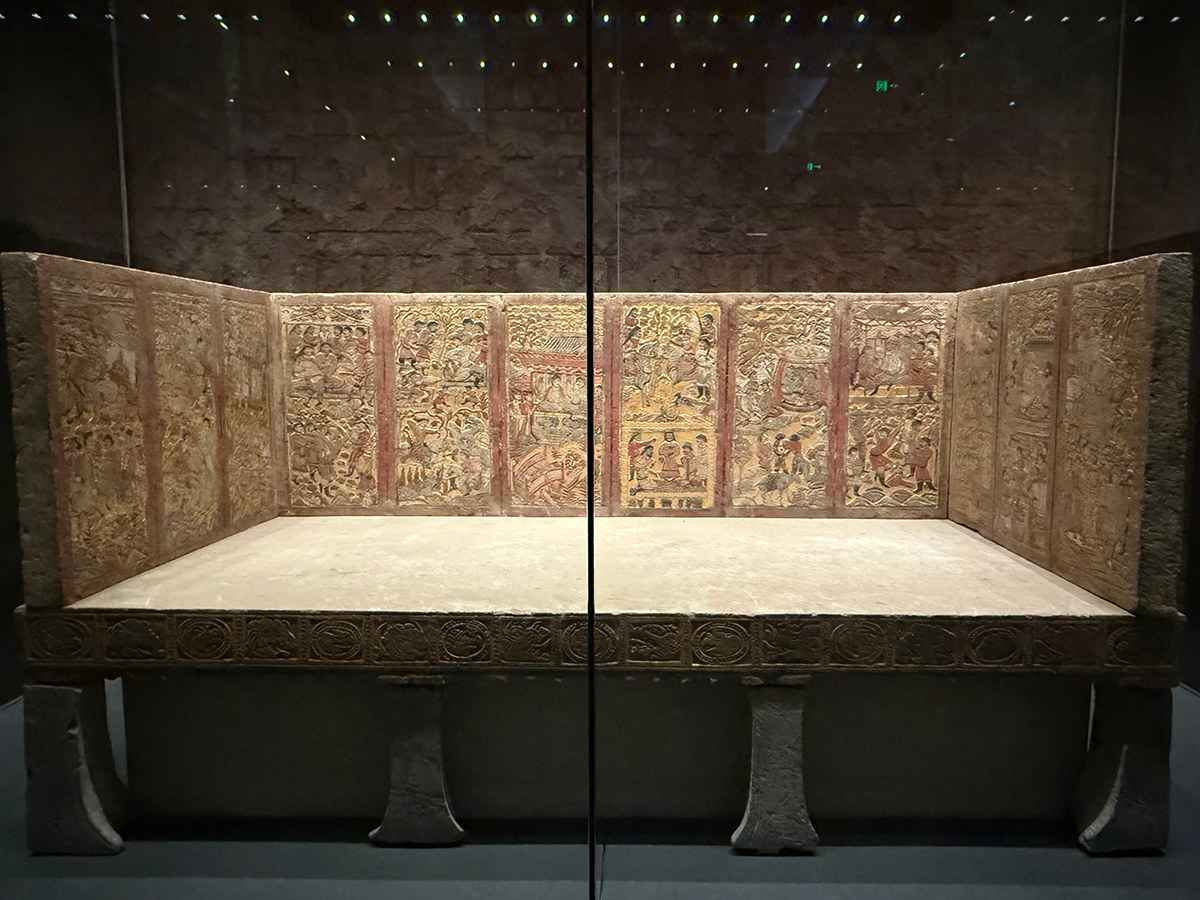
To examine these variations and tensions, the dissertation is organized around four fields of discourse in which people of Sogdian origin were classified and represented: administrative practice, literary narratives, elite self-representations, and social relations. Official histories and literary narratives primarily engaged with Sogdians through geopolitical management, administrative classification, and narrative convention. Social documents, funerary inscriptions, and material culture produced significantly different representations. Funerary art from the Northern Dynasties to the Tang period, in particular, articulated multiple Sogdian identities shaped by social position, function, and degree of agency. Sogdian elites in North China used funerary imagery to present mobility and official service as compatible with recognized elite status within Chinese institutional and ritual frameworks. Lower-status Sogdians, including merchants, slaves, and performers, were represented through symbolic conventions that associated them with animals, musical instruments, and exotic objects, fixing them within a functional social hierarchy.
Taken together, these materials demonstrate that Sogdian labels functioned as flexible designations whose meanings shifted across representational systems. The contexts in which these labels appeared frequently worked against their consolidation into a coherent ethnic or cultural identity.