to top

Thesis Topic
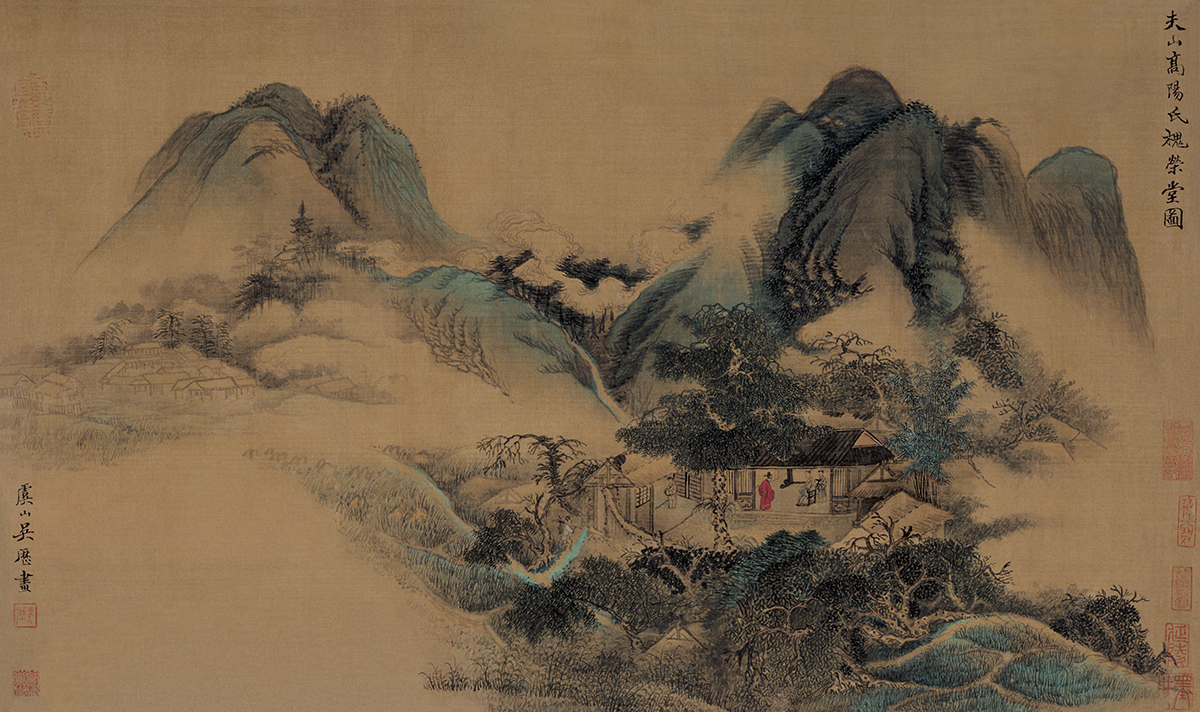
This study focuses on a “hidden thread” that has long existed in the history of Chinese painting but has yet to be explicitly identified and studied as such: paintings of ancestral estates. Here, the term refers to paintings that take residences passed down through generations of a family as their central subject and consciously draw on the ancestral estate as a visual motif through which to articulate family narratives. Paintings of ancestral estates do not constitute a new or distinct pictorial category; rather, they are embedded within the broader tradition of landscape painting and overlap with established pictorial subjects—including gardens, studios, and scenic sites—that have been examined in previous scholarship. A focused study of paintings of ancestral estates thus offers an additional point of entry through which to reconsider the history of Chinese painting.
The study develops along three interrelated lines of inquiry. First, it examines paintings of ancestral estates produced in two contrasting circumstances—“the flourishing and continuation of ancestral property” and “the loss of the family home”—and considers the distinct familial concerns to which they responded. Second, it analyzes how such paintings organize and construct visual narratives of family history through elements including figures, objects, and landscape features. Third, it considers how, after their completion, these paintings moved beyond commemoration and viewing within the family to enter broader social relationships and continue to perform social functions. In pursuing these questions, particular attention is paid to the complex interplay among the patron’s personal circumstances, local identity, and familial belonging, and to the ways in which images mediate these relationships. Region and kinship have long been classic subjects of inquiry in the study of traditional Chinese society, particularly in anthropology and sociology. From the perspective of art history, this thesis seeks to engage with these questions by taking images as its primary materials.