to top

Thesis Topic
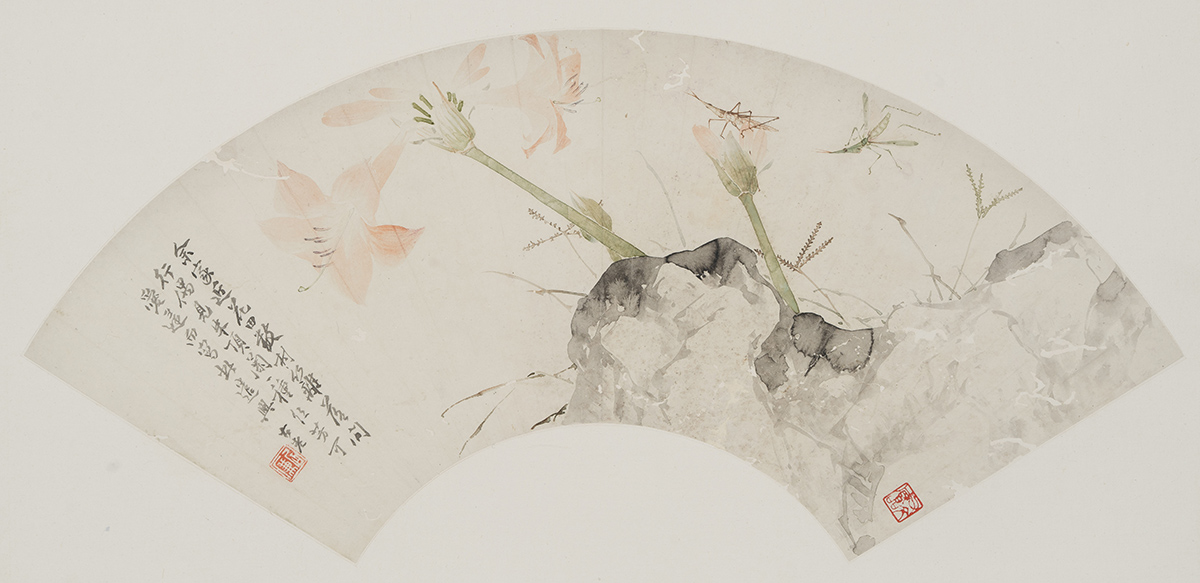
The Guangdong painter Ju Lian (1828–1904) made the natural world the principal subject of his career. His works remain unmistakably grounded in the inherited conventions of Chinese bird-and-flower painting, yet they attend with unusual specificity to the forms and behaviors of living organisms and the ecological relations among them. Through his selection and treatment of natural subjects, Ju negotiated the boundaries of bird-and-flower painting, extending both what the genre could include and how it could picture nonhuman life. This dissertation situates his practice within nineteenth-century Guangdong and reconstructs what I call an “ecology of more-than-human encounter”—the relational field through which plants and animals became accessible, observable, and picturable. This approach shifts attention from the natural world as pictorial content to the social, environmental, and technical processes through which it acquired visibility. I argue that encounter and representation were reciprocal stages. The circumstances of access shaped what Ju could observe, while the conventions and procedures of bird-and-flower painting organized his attention and conditioned how he studied and represented organisms. Reconstructing this reciprocity reveals how painting became, in Ju’s hands, a means of inquiring into the natural world.
This dissertation is organized into two parts, comprising four chapters in total. Part I, “Conditions of Encounter,” reconstructs the social and environmental circumstances that brought Ju into contact with particular plants and animals. It traces the networks of kinship, mentorship, and patronage that structured his artistic formation and access to particular sites, gardens, and natural subjects. It also follows native and non-native flora and fauna through overland and maritime routes, Canton markets, Fa-tee plant nurseries, and private estates. Together, these investigations demonstrate how social relationships, regional environments, transnational exchange, and organisms’ own requirements conditioned their movement, survival, and availability for observation. Part II, “Picturing Encounter,” examines how the resources of bird-and-flower painting mediated these encounters and were reworked through them. It considers how Ju placed familiar motifs alongside seldom-depicted organisms while directing attention toward biological processes and interactions, thereby reconfiguring what the genre could make visible and meaningful. It also examines the interdependence between seeing and making. Practices such as insect preservation conditioned how organisms could be studied for depiction, while the technical manipulation of water, powder, pigment, and ink shaped the rendering of natural forms on the pictorial surface. Comparisons with export paintings and natural-history illustrations produced in Guangdong demonstrate how related conditions of observation yielded different visual forms, clarifying the role of pictorial conventions and material procedures in shaping representations of nature. The dissertation thus reconsiders Ju’s place in the histories of Chinese painting and natural history, demonstrating how his works embodied practices of observation, painting, and empirical inquiry into the natural world that were grounded in the conditions of nineteenth-century Guangdong.