to top

Thesis Topic
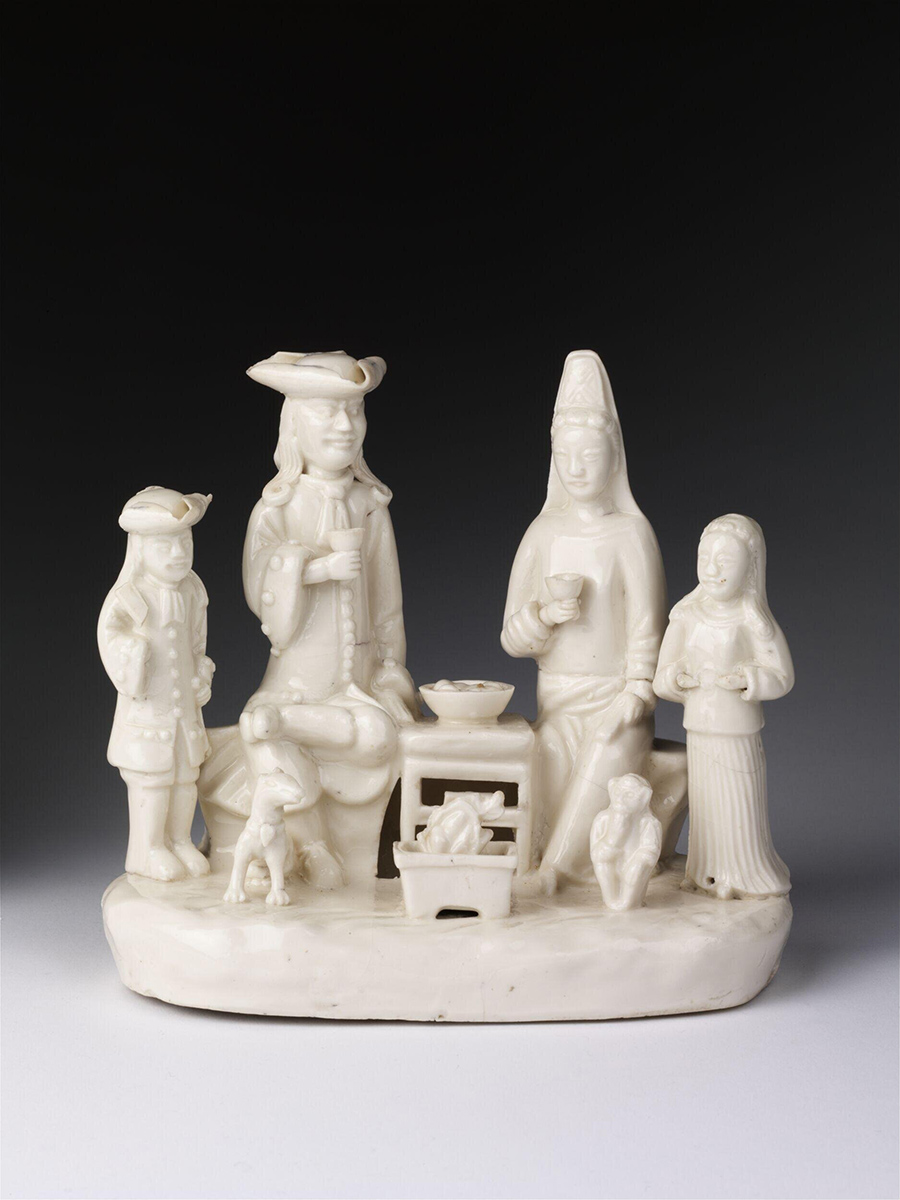
Chinese Export Porcelain Figures in the Shape of People, especially for the European Market, refer to porcelain figures in people form primarily produced in Jingdezhen and Dehua during the 17th and 18th centuries for export to Europe. As a product situated at the intersection of the mature traditions of Chinese figure sculpture and the peak of porcelain craftsmanship, these export porcelain figures embody a complex blend of religious and secular, Eastern and Western cultural elements—— Their mass production marked a transition from ritual objects used in religious contexts to secular commodities, while their transcultural circulation transformed them into material carriers of hybrid imagery and aesthetic values between East and West.
When these culturally rich products sailed west, they did not remain merely exotic commodities. European luxury dealers redefined their visual characteristics through over-decoration such as clobbering and mounting, while European porcelain manufactories integrated them into their own ceramic sculptural traditions through imitation and transformation. Through this process of reconstruction, Chinese export porcelain figures acquired a new cultural identity as "pagoda", and their functions expanded from being just exotic imports to serving as three-dimensional interior decorations and as entertaining displays on banquet tables. Furthermore, through dissemination across multiple media such as prints, literature, and play, it solidified into a stereotypical visual symbol of the "Chinese" in European collective imagination.
This study, grounded in clarifying the shape characteristics of Chinese export porcelain figures in the shape of people, traces their overdecoration, imitation, transformation and uses after entering Europe. It explores the transcultural transformation from three-dimensional figures to Chinoiserie “pagoda” icons, uncovering the evolving European perceptions and attitudes toward these representations of Chinese figures, ultimately revealing how these shifts reflect the early modern European construction of cultural imaginaries about Eastern people.